Mould & Condensation
How To Stop Condensation On Bedroom Windows
The fix is usually about moisture and airflow, not the window itself. Open trickle vents if you have them, avoid drying clothes in the bedroom, keep curtains away from the glass overnight, wipe water off each morning, and use a dehumidifier if humidity stays high.
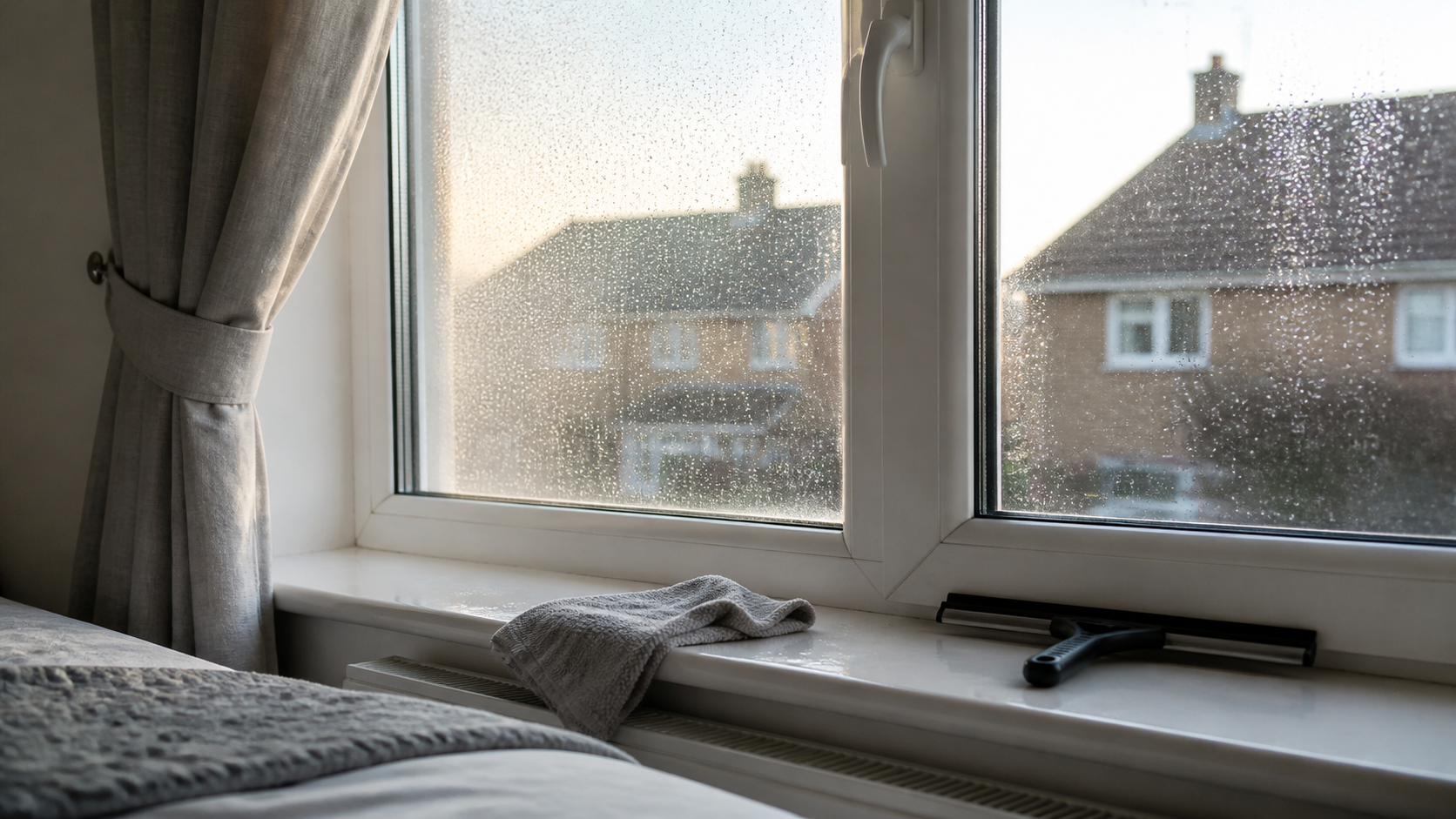
Before You Start
Bedroom window condensation is usually a moisture and airflow problem, not a sign that the window needs replacing. It happens when warm indoor air touches cold glass overnight and the moisture in the air turns back into water.
The aim is to remove that water quickly, reduce how much moisture builds up overnight, and stop the area around the window staying damp long enough for mould to grow.
If you have condensation between the panes of double glazing, that is different. It usually means the sealed unit has failed, and the fix is a glazing repair or replacement unit rather than better ventilation.
At A Glance
- Main cause: warm moist air meeting cold glass
- Most common time: overnight and early morning
- Quick action: wipe water away every morning
- Best prevention: lower humidity plus better airflow
- Useful tool: a cheap hygrometer
- Risk if ignored: mould on seals, frames, window reveals, curtains, and nearby walls
Why Bedroom Windows Get Wet Overnight
People release moisture while they sleep. In a closed bedroom, that moisture builds up in the air for hours. When it reaches cold glass, the air cools and cannot hold as much water, so droplets form on the inside of the window.
This is why condensation is usually worse in winter and first thing in the morning. It is also worse in rooms with closed doors, blocked trickle vents, drying laundry, heavy curtains pressed against the glass, or poor airflow behind blinds.
The glass is where you see the water, but the same moisture can affect window frames, reveals, curtains, and cold external walls.
What You’ll Need
- A clean window cloth, towel, squeegee, or window vacuum
- A hygrometer to check room humidity
- A dehumidifier, if humidity stays high
- Curtain tie-backs, holdbacks, or a way to keep fabric away from the glass
You do not need specialist equipment to start. A hygrometer is useful because it shows whether the room is genuinely damp, rather than relying on how the room feels.
Step-By-Step: How To Stop Condensation On Bedroom Windows
1. Wipe The Window Every Morning
Remove water from the glass, sill, and frame each morning. This does not solve the cause, but it stops the water sitting there all day and soaking into seals, paint, timber, plaster, or curtains.
Use a cloth, squeegee, or window vacuum. If the sill or frame is already showing black spots, clean the mould separately and dry the area properly.
2. Open Trickle Vents If You Have Them
If your windows have trickle vents, leave them open unless there is a specific reason not to. They allow a small amount of background airflow without needing the window wide open.
It is tempting to close every vent to keep heat in, but a sealed room often holds more moisture. That moisture then ends up on the coldest surface, which is usually the glass.
3. Keep Air Moving Around The Glass
Do not trap cold glass behind heavy curtains or tightly fitted blinds all night. Leave a small gap so air can move around the window, and avoid letting curtains rest on a wet sill.
If the condensation is worst behind a blind, try leaving the blind slightly raised or angled for a week and see whether the morning water reduces.
4. Reduce Moisture In The Bedroom
Avoid drying laundry in the bedroom if you can. Wet clothes release a lot of moisture, and a closed bedroom gives that moisture very few places to go.
Also check what is happening elsewhere in the home. Steam from showers, baths, cooking, and drying clothes can travel into bedrooms, especially in flats or homes where doors are left open.
5. Ventilate After Moisture Is Created
Use bathroom and kitchen extractor fans while moisture is being produced and for a while afterwards. If the bathroom is next to the bedroom, this can make a noticeable difference.
In the bedroom itself, a short burst of window opening in the morning can help clear humid air, especially after you have wiped the glass. The point is controlled ventilation, not leaving the room freezing all day.
6. Measure Humidity For A Week
Put a hygrometer in the bedroom and check it in the evening and first thing in the morning. If the room is regularly humid overnight, the condensation is not just a window issue.
Keep the readings simple. You are looking for a pattern: whether humidity rises overnight, whether it drops after ventilation, and whether drying laundry or closed vents make it worse.
7. Use A Dehumidifier If Humidity Stays High
If the room stays humid despite basic ventilation, a dehumidifier can help. It is especially useful in small bedrooms, flats, older homes, and houses where drying clothes indoors is hard to avoid.
Place it where air can circulate, follow the manufacturer instructions, and empty or drain it regularly. A dehumidifier helps manage moisture, but it should not be used to hide a leak or serious damp problem.
If Condensation Still Comes Back
If condensation still comes back every morning, look at the wider moisture pattern rather than blaming the glass straight away.
- If windows are wet but walls are dry, the room may need better overnight airflow.
- If the window reveal or nearby wall is mouldy, condensation may be affecting cold surfaces around the window.
- If the room smells damp or plaster feels wet, check for leaks or damp materials.
- If moisture appears between the panes of double glazing, the sealed unit may have failed.
For a deeper diagnosis of recurring moisture and mould, see Why Does Mould Keep Coming Back After Cleaning?.
Common Mistakes
- Closing all vents to keep heat in, then trapping moisture overnight
- Leaving wet glass, sills, and frames to dry by themselves
- Drying laundry in the bedroom with the door closed
- Pushing curtains or blinds tight against cold glass
- Treating mould on seals or walls without reducing humidity
- Assuming new windows are the only answer before checking airflow and moisture
When It Might Be A Window Problem
Condensation on the room-side surface of the glass is usually caused by indoor humidity meeting a cold surface. Better moisture control and airflow normally help.
Condensation between double-glazing panes is different. If the misting is inside the sealed unit and you cannot wipe it away from either side, the seal has probably failed. In that case, ventilation will not clear the trapped moisture, and the glass unit may need repair or replacement.
When To Get Help
Get advice if the condensation is heavy every day despite ventilation, if mould is spreading onto walls or ceilings, or if plaster around the window is soft, stained, or damp after rain.
If you rent, report recurring condensation and mould in writing and keep dated photos. The cause may involve ventilation, heating, insulation, failed glazing, or property maintenance.