Mould & Condensation
Why Does Mould Keep Coming Back After Cleaning?
Mould usually comes back after cleaning because the surface has been treated but the cause has not. In UK homes, the usual causes are condensation, poor ventilation, cold external walls, furniture pushed tight against walls, leaks, or damp materials that never fully dry.
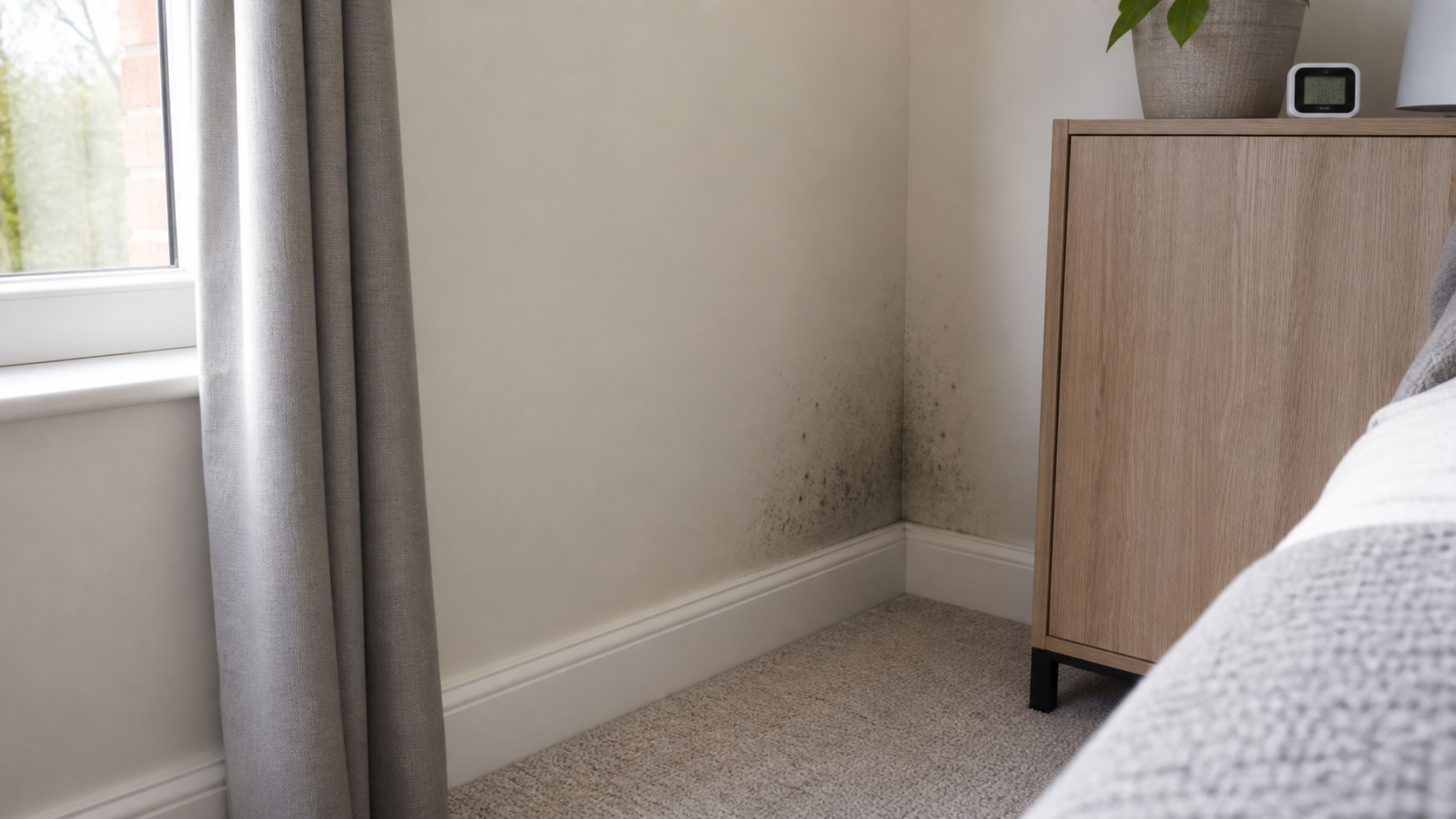
At A Glance
- Most common cause: condensation on cold surfaces
- Common rooms: bedrooms, bathrooms, kitchens, cupboards, and corners behind furniture
- First checks: humidity, airflow, wall temperature, leaks, and whether the patch changes after rain
- Short-term step: clean the surface safely and keep the area dry
- Long-term fix: stop the wall getting damp in the first place
- Do not ignore: recurring mould near ceilings, floors, pipework, electrics, or soft plaster
Why Cleaning Alone Does Not Stop Mould
Cleaning removes the visible mould, but it does not change the conditions that let it grow. If the same wall keeps getting damp, cold, or starved of airflow, mould can return even after a careful clean.
That is why repeated spraying rarely solves the problem on its own. Once mould comes back in the same place, the useful question is not “which cleaner is strongest?” but “why is this surface staying damp?”
For the cleaning method itself, use How To Remove Mould From Painted Walls. This guide is about finding the cause.
Common Reasons Mould Keeps Coming Back
Condensation On Cold Surfaces
Condensation is the most common reason mould returns in bedrooms, bathrooms, kitchens, and around windows. Warm indoor air carries moisture. When that air meets a cold wall, window reveal, ceiling corner, or external wall, some of the moisture can settle on the surface.
This is usually worse in winter, overnight, and in rooms where moisture is produced but not extracted. If the patch appears mainly in cold weather, condensation should be high on the list.
Poor Airflow Behind Furniture
Furniture can create a small cold pocket against the wall. Wardrobes, beds, sofas, curtains, storage boxes, and laundry baskets all reduce airflow if they sit tight against an external wall.
The wall behind them stays cooler and dries more slowly, so mould can return even when the rest of the room looks fine. If the patch is hidden behind furniture, treat airflow and furniture placement as the first things to check.
High Indoor Humidity
High humidity gives mould more chances to grow. Drying clothes indoors, cooking without extraction, long showers, unvented tumble dryers, and keeping windows closed all add moisture to the air.
A small hygrometer is useful because it turns a vague damp feeling into a number. If humidity is often high, especially overnight, the wall may be getting damp from the air rather than from a leak.
Weak Ventilation
Ventilation is not just about opening a window once. Kitchens and bathrooms need moisture removed while it is being produced, and bedrooms often need some airflow after a night of breathing, closed doors, and cold glass.
If windows are wet inside most mornings, the condensation problem is not limited to the glass. Start with How To Stop Condensation On Bedroom Windows and check whether the same moisture is affecting nearby walls.
Cold Walls Or Thermal Bridges
Some areas of a home are simply colder than others. External corners, lintels, window reveals, solid walls, and poorly insulated patches can all attract condensation because they sit below the temperature of the surrounding room.
This does not always mean the house has a serious damp problem. It does mean the surface is more likely to stay wet for long enough that mould returns.
Leaks, Rainwater, Or Damp Materials
If mould appears near a ceiling, floor, pipe, chimney breast, window frame, or external wall after rain, check for water ingress. Cleaning will not solve mould growing on damp plaster, timber, insulation, or repeatedly wet paint.
Warning signs include staining, tide marks, bubbling paint, crumbling plaster, musty smells, or a patch that feels damp even after the room has been aired.
Painting Over The Problem
Anti-mould paint can help in the right situation, but it is not a cure for damp. If the surface is still getting wet, paint becomes a temporary cover rather than a fix.
Do not repaint until the mould has been removed, the wall is dry, and the cause is under control. If you are dealing with staining or damp patches, read Can You Paint Over Damp Patches?.
How To Diagnose The Cause
Start by looking for patterns. Mould that returns in the same place is usually telling you something about that surface.
- Check the location. Is it on an external wall, window reveal, ceiling corner, behind furniture, or near a pipe?
- Look for water clues. Staining, bubbling paint, soft plaster, tide marks, or damage after rain point away from simple surface mould.
- Move anything blocking airflow. Leave a 5-10 cm gap behind furniture and see whether the wall dries more easily.
- Measure humidity for a few days. Check morning and evening readings, especially in bedrooms, bathrooms, and kitchens.
- Note when it gets worse. Overnight mould, winter mould, mould after showers, and mould after rain all suggest different causes.
Take photos as you go. They help you spot whether the patch is spreading, and they are useful if you need a landlord, builder, damp surveyor, or ventilation specialist to look at it.
What To Do Next
Once you have a likely cause, choose the next step based on the pattern:
- If the mould is a small surface patch, clean it safely using How To Remove Mould From Painted Walls.
- If the patch is behind furniture, improve the air gap and airflow first.
- If windows are wet inside most mornings, reduce condensation before repainting.
- If the patch appears after rain or near pipework, look for water ingress or a leak.
- If plaster is damaged, soft, or always damp, do not treat it as a simple cleaning job.
The aim is not to do every possible fix at once. It is to stop the surface staying damp long enough for mould to grow again.
When To Get Help
Get professional advice if mould is widespread, keeps returning after a leak, appears with damaged plaster, or affects ceilings, floors, electrical areas, or structural timbers.
You should also get help if anyone in the home is vulnerable and the mould is recurring, or if the room is difficult to ventilate safely.
If you rent, report recurring mould in writing and keep dated photos. The cause may involve ventilation, insulation, leaks, heating, or property maintenance, and it is better to create a clear record early.