Mould & Condensation
How To Remove Mould From Painted Walls
Ventilate the room, wear gloves and eye protection, and clean the patch with a mould remover labelled as suitable for painted surfaces. Wipe it down as directed and dry the wall fully. Do not repaint until the mould is gone and the wall is completely dry.
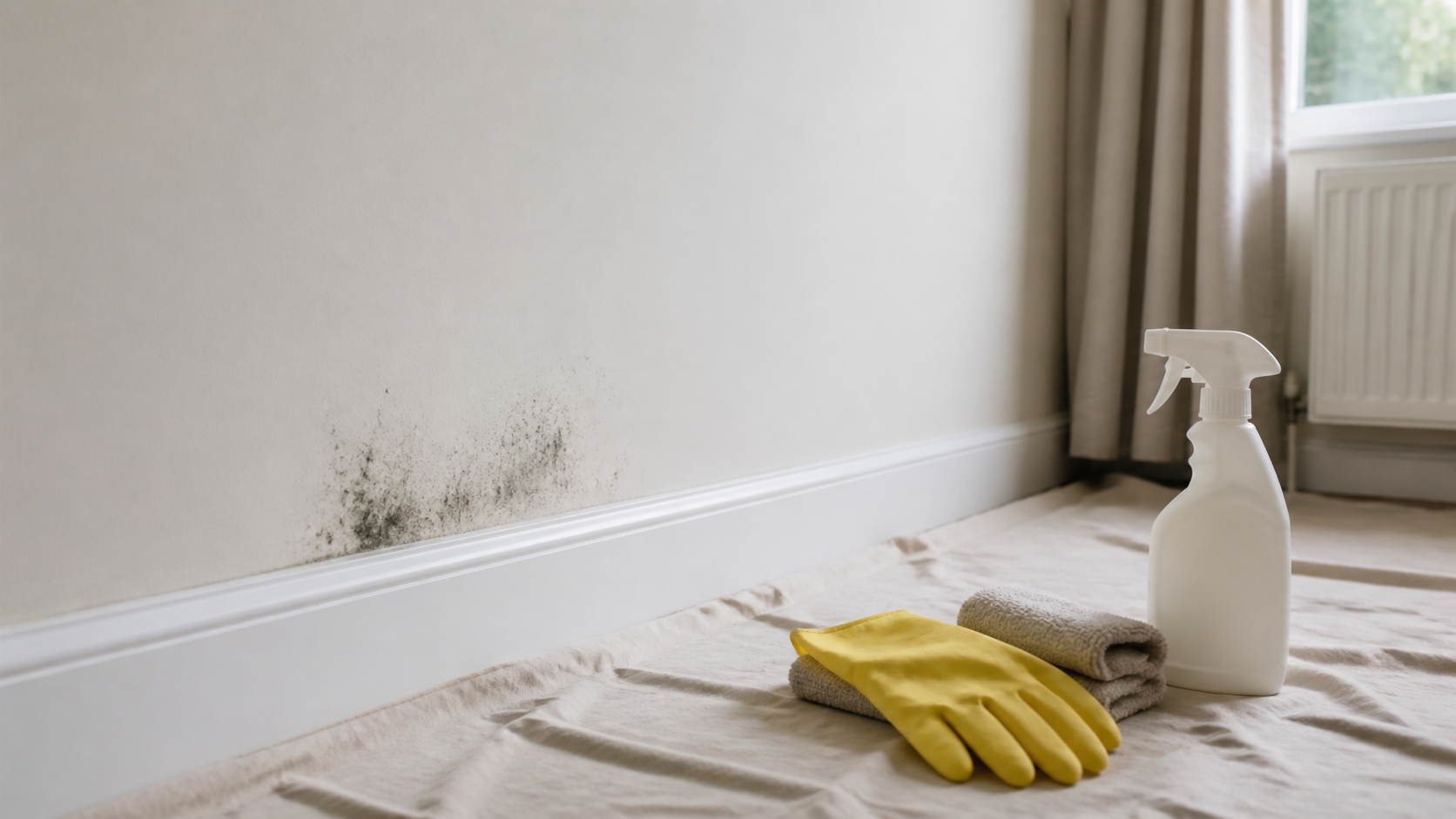
Before You Start
Only clean small surface patches yourself. If the mould covers a large area, keeps returning, sits near electrics, or comes with soft plaster, leaks, or heavy damp, treat it as a moisture problem before you treat it as a decorating job.
Use one cleaning product at a time and follow the label carefully. Do not mix mould remover with bleach, ammonia, vinegar, or other household cleaners.
Keep children and pets out of the room while you clean. If the room is hard to ventilate, or the mould is more than a small patch, it is better to get advice than to disturb it and hope for the best.
What You’ll Need
- Rubber gloves
- Eye protection
- Cleaning cloths or disposable cloths
- A bucket of warm water
- Dust sheet, old towel, or plastic sheet
- Mould remover marked as suitable for painted surfaces
- Mask, if the product label recommends one or the room is poorly ventilated
Avoid abrasive scourers unless you are happy to touch up the paint afterwards. Heavy scrubbing can take the paint film with it and leave a clean but obvious patch.
Step-By-Step: How To Remove Mould From Painted Walls
1. Move Furniture And Protect The Area
Pull furniture, curtains, storage boxes, and laundry baskets away from the wall first. You need enough room to clean properly, and the wall needs air around it while it dries.
Cover nearby flooring, bedding, fabrics, or skirting boards before you start. Some mould removers can bleach fabric or leave marks on finishes you did not mean to clean.
2. Ventilate The Room
Open a window before you spray or wipe the wall. If the room has an extractor fan, switch it on as well.
Try not to create spray mist near your face. Spray close to the surface, or apply the cleaner to a cloth first if the product instructions say that is allowed.
3. Test The Cleaner First
Test the mould remover on a small hidden area of paint before using it on the visible patch. Wait for the time recommended on the label, then check whether the paint has bleached, stained, or softened.
This is especially important on dark paint, matt emulsion, older paint, or any wall where the paint already looks poorly bonded.
4. Apply A Suitable Mould Cleaner
Apply the cleaner according to the label and give it the recommended contact time. Letting the product work is usually better than attacking the wall with a cloth straight away.
Use a product that says it is suitable for painted walls or interior surfaces. Stronger cleaners can mark paint, especially on coloured walls, so this is not a place to guess.
5. Wipe The Wall Gently
Wipe the mould away with a damp cloth, working from the outside of the patch towards the centre. That keeps the residue contained instead of spreading it across a wider area.
Rinse or change the cloth regularly as you go. If the product label says the surface should be rinsed afterwards, wipe the wall again with clean warm water.
6. Dry The Wall Fully
Dry the area with a clean cloth, then leave the wall open to airflow. Keep furniture away until the surface is fully dry, not just dry to the touch.
Do not push wardrobes, laundry baskets, or bedside tables straight back against the wall. Even a small air gap makes it easier for the surface to stay dry after cleaning.
7. Check The Paint
Once the wall is dry, look closely at the paint surface. If the paint is intact and the staining has gone, you may not need to repaint at all.
If the paint is stained, flaking, bubbling, or powdery, cleaning has exposed a decorating or damp issue. Do not repaint until the wall is dry, stable, and no longer showing signs of active moisture.
Can You Use Bleach On Painted Walls?
Bleach can mark paint, lighten coloured walls, and damage nearby fabrics. It can also create unsafe fumes if it is mixed with other cleaners.
For painted walls, the safer approach is to use a mould remover that is labelled as suitable for that surface and follow the instructions. If you choose to use any bleach-based product, treat it as a chemical cleaner: ventilate the room, protect nearby materials, wear gloves and eye protection, and never mix it with anything else.
Can You Paint Over Mould?
No. Remove the mould first and let the wall dry fully before painting.
Painting over mould can trap staining and moisture under the new paint. If staining remains after cleaning, use a suitable stain-blocking primer before applying emulsion. Anti-mould paint can help in rooms that are prone to condensation, but it will not fix leaks, damp plaster, or poor ventilation on its own.
For repainting after damp or staining, see Can You Paint Over Damp Patches?.
What If The Mould Comes Back?
If mould returns after cleaning, the wall is still getting damp or staying cold for too long. At that point, the cleaner is not the main issue. The wall needs a moisture diagnosis.
Common causes include condensation, poor airflow behind furniture, cold external walls, leaks, or damp plaster. For the full diagnosis, read Why Does Mould Keep Coming Back After Cleaning?.
If the patch is behind a wardrobe, sofa, bed, or storage unit, the likely issue is poor airflow behind furniture. Treat that as a placement and ventilation problem, not just a cleaning problem.
When Cleaning Is Not Enough
Cleaning is not enough if:
- the mould covers a large area
- the wall feels damp after the room has been ventilated
- plaster is soft, crumbling, or stained
- paint is bubbling, peeling, or flaking
- the patch appears after rain
- the mould is near pipes, ceilings, floors, windows, or electrical fittings
- anyone in the home is vulnerable and the mould is recurring
In those cases, find and fix the moisture source before decorating. Surface cleaning may make the wall look better for a short time, but it will not solve a leak, damp plaster, or a ventilation problem.